%2Ffit-in%2F250x250%2Fusers%2Fc8f5f561-6f25-4672-8ee7-db00a2903b37%2Fimages%2F857a5fe1-a921-481e-a8b4-3c2c1e016013.jpg&w=1920&q=100)
/users/c8f5f561-6f25-4672-8ee7-db00a2903b37/ratecard/a949dd16-bafd-4f28-92aa-41d666bdda9e.jpg)
%2F300x300%2Fusers%2Fc8f5f561-6f25-4672-8ee7-db00a2903b37%2Fratecard%2Fa949dd16-bafd-4f28-92aa-41d666bdda9e.jpg&w=256&q=75)
%2F300x300%2Fusers%2Fc8f5f561-6f25-4672-8ee7-db00a2903b37%2Fimages%2Fgreat-fishing-missouri-3072.jpg&w=256&q=75)
%2F300x300%2Fusers%2Fc8f5f561-6f25-4672-8ee7-db00a2903b37%2Fimages%2Ffishing-adventures-missouri-3074.jpg&w=256&q=75)
%2F300x300%2Fusers%2Fc8f5f561-6f25-4672-8ee7-db00a2903b37%2Fimages%2Fbest-great-fishing-missouri-3079.jpg&w=256&q=75)
%2F300x300%2Fusers%2Fc8f5f561-6f25-4672-8ee7-db00a2903b37%2Fimages%2Ffishing-adventure-dora-3081.jpg&w=256&q=75)
%2F300x300%2Fusers%2Fc8f5f561-6f25-4672-8ee7-db00a2903b37%2Fimages%2Ffishing-duo-great-adventure-3118.jpg&w=256&q=75)
%2F300x300%2Fusers%2Fc8f5f561-6f25-4672-8ee7-db00a2903b37%2Fimages%2Fstriped-bass-dora-fishing-3109.jpg&w=256&q=75)
%2F300x300%2Fusers%2Fc8f5f561-6f25-4672-8ee7-db00a2903b37%2Fimages%2Fstriped-bass-dora-3167.jpg&w=256&q=75)
%2F300x300%2Fusers%2Fc8f5f561-6f25-4672-8ee7-db00a2903b37%2Fimages%2Ffishing-missouri-3045.jpg&w=256&q=75)
%2F300x300%2Fusers%2Fc8f5f561-6f25-4672-8ee7-db00a2903b37%2Fimages%2Fanglers-land-striped-bass-missouri-3080.jpg&w=256&q=75)
%2F300x300%2Fusers%2Fc8f5f561-6f25-4672-8ee7-db00a2903b37%2Fimages%2Ffishing-striped-bass-missouri-3559.jpg&w=256&q=75)
2 Day Overnight River Camping Sunny Daze Guide
 Dora, MO, USA
What you will be catching:
 Brown Trout
 Smallmouth Bass
 Striped Bass
 Walleye
 Rainbow Trout
- Two-day guided river fishing experience with overnight camping
- Prime early morning and evening fishing during peak activity hours
- Comprehensive river exploration at relaxed, unhurried pace
Trip Pricing and Availabilities:
2 Day Overnight River Fishing Adventure
Picture this: two full days on some of the best water you'll find anywhere, chasing everything from feisty rainbow trout to hard-fighting striped bass, with a cozy campfire and streamside camping right in the middle of it all. Our 2 Day Overnight trip with Sunny Daze Guide Service isn't just about fishing – it's about disconnecting from the daily grind and reconnecting with what really matters. You'll have the water mostly to yourself, sleep under the stars, and wake up ready to hit productive spots most folks never even know about. All your meals are covered, so the only thing you need to worry about is whether to tie on that streamer or switch back to a spinner.
What to Expect on the Water
This isn't your typical day trip where you're watching the clock. We're talking about a real fishing experience that unfolds at the river's pace, not yours. Day one starts early with breakfast cooked streamside, then we'll work through the morning bite targeting whatever's most active. Could be smallmouth bass staging in the deeper pools, or maybe the walleye are hitting hard along the rocky points. The beauty of having two days is we can adjust our game plan based on what the fish are telling us. After a solid morning session, we'll set up camp at one of my favorite spots – somewhere with good access to multiple fishing zones and enough flat ground for a comfortable night out. Lunch is always fresh, and we'll usually eat it on the water or wherever the fishing happens to be hot. Evening fishing is often the highlight, especially when those striped bass start cruising the shallows as the sun drops low. Camp setup is simple but comfortable, and dinner around the fire is when the day's stories really come alive.
Techniques & Gear Setup
We fish with whatever works best for the conditions and species we're targeting that day. For the trout, we'll usually start with lighter tackle – spinning rods rigged with small jigs, spinners, or live bait depending on the water clarity and current. The bass fishing calls for a bit more versatility, so we'll have medium-action rods ready with everything from topwater plugs to soft plastics. Walleye fishing here is all about bottom presentation, so expect to be working jigs and live minnows along structure. The striped bass can be the wildcard – sometimes they want fast-moving lures, other times they're more selective. I provide all the rods, reels, and tackle, but if you've got a favorite setup, bring it along. We'll be wading some sections and fishing from the bank in others, so pack accordingly. The camping gear is basic but solid – quality tents, sleeping bags, and all the cooking equipment. You just need to bring personal items and whatever clothing layers make sense for the weather.
Top Catches This Season
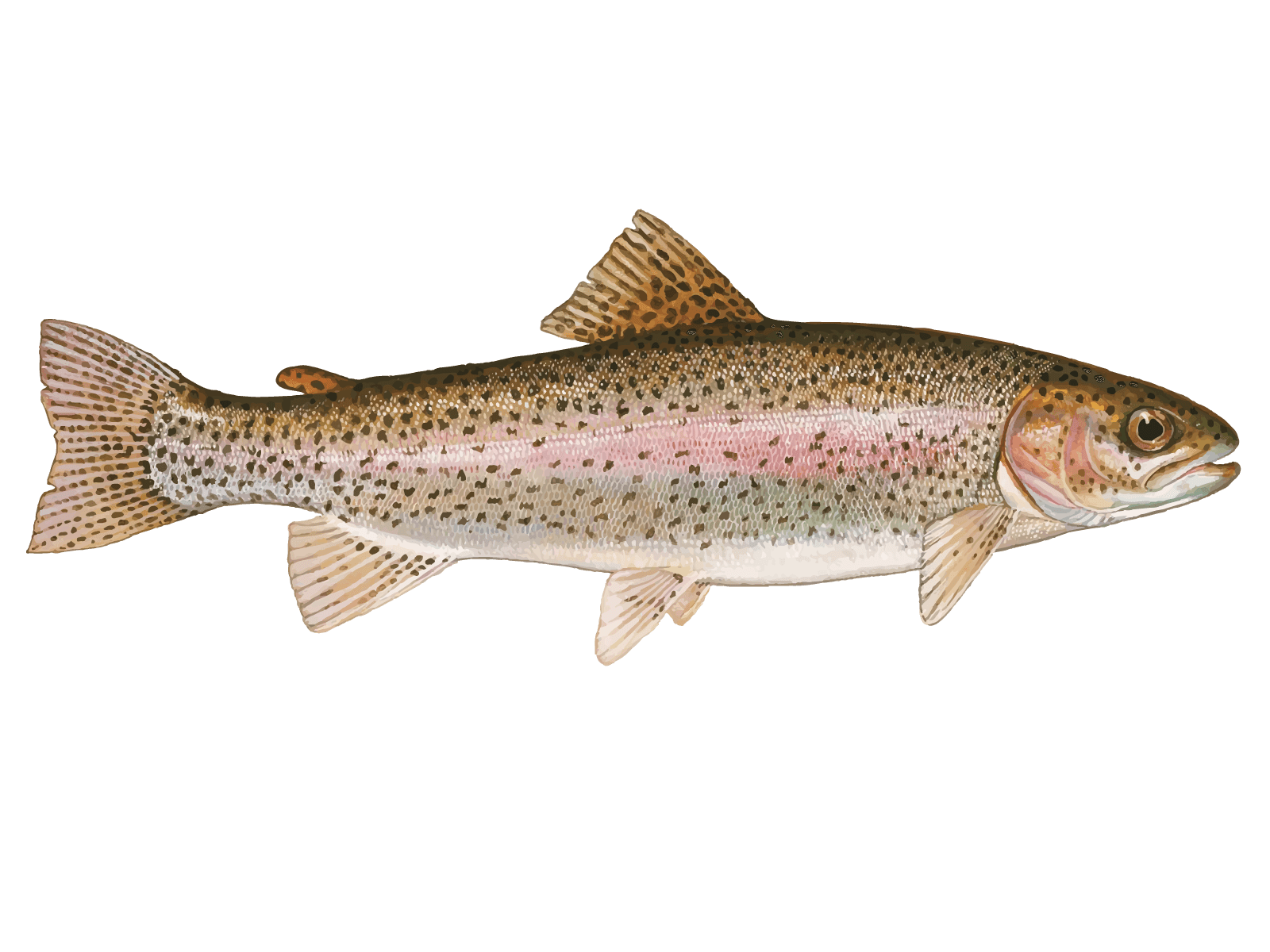
Rainbow trout are the bread and butter fish around here, and for good reason. These fish fight way above their weight class, especially in moving water. Most of our rainbows run between 12 to 16 inches, with the occasional 18-inch beauty that'll make your day. They're most active during the cooler parts of the day – early morning and evening – and they love structure like fallen logs, undercut banks, and deeper pools with good current breaks. Spring through fall is prime time, but honestly, if there's open water, there's a chance at rainbows. What guests love most is how visual these fish can be. You'll often see them rise to insects or chase baitfish, which makes the fishing interactive and exciting. Brown trout are the crafty cousins in this system. They're typically larger than the rainbows but much more selective about what they'll eat. These fish can push 20 inches or more, and they know every hiding spot in their home water. Browns are notorious for feeding heavily at night, which is why our evening sessions can be so productive. They're ambush predators that love to tuck under cover during the day, then move into the shallows to hunt when the light fades. Landing a good brown trout is always a highlight because they're both challenging to hook and powerful fighters once they're on.
Walleye fishing here offers something special that many anglers have never experienced – sight fishing in clear water. These fish are typically thought of as deep, murky water species, but in our system they're often visible in 8 to 12 feet of water around rocky structure. They average 14 to 18 inches with plenty of bigger fish mixed in. Walleye are most active during low light periods, which perfectly matches our camping schedule. The evening bite can be fantastic, and early morning before sunrise often produces the biggest fish. What's really fun is watching them school up around points and drop-offs. Once you find one walleye, there are usually more in the area. Smallmouth bass bring pure excitement to every trip. These fish are aggressive, acrobatic, and always ready to fight. Our smallies typically run 12 to 16 inches, but 18-inch fish show up regularly. They love rocky areas, current breaks, and anywhere there's good structure to ambush prey. Summer and early fall are peak times, but they'll bite throughout the season. What guests love about smallmouth is their attitude – they hit hard, jump high, and never give up easy. They're also willing to eat almost anything, from topwater lures to deep-running cranks.
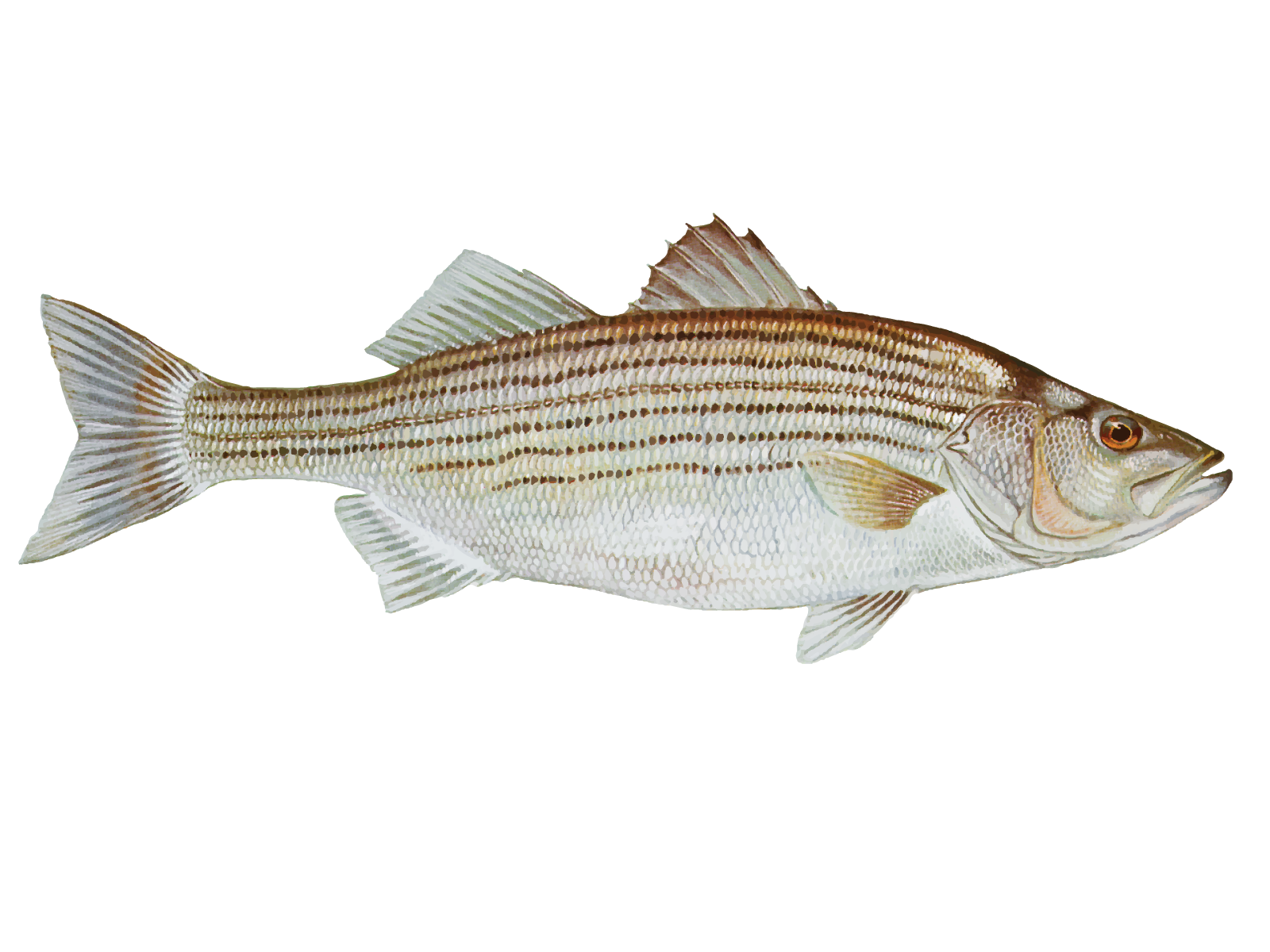
Striped bass are the wildcards that can turn a good trip into a legendary one. These fish can range from schoolie-size up to 30-inch bruisers that'll test your tackle and your nerves. Stripers are nomadic, moving through the system following bait schools, which means some trips you'll see tons of them and other trips just a few. When they're here, though, the action can be non-stop. They're most active during low light and often feed in shallow water where you can sight cast to them. Fall is typically the best time for numbers, but big fish can show up any time. The thing about striped bass is they bring that saltwater mentality
Learn more about the animals
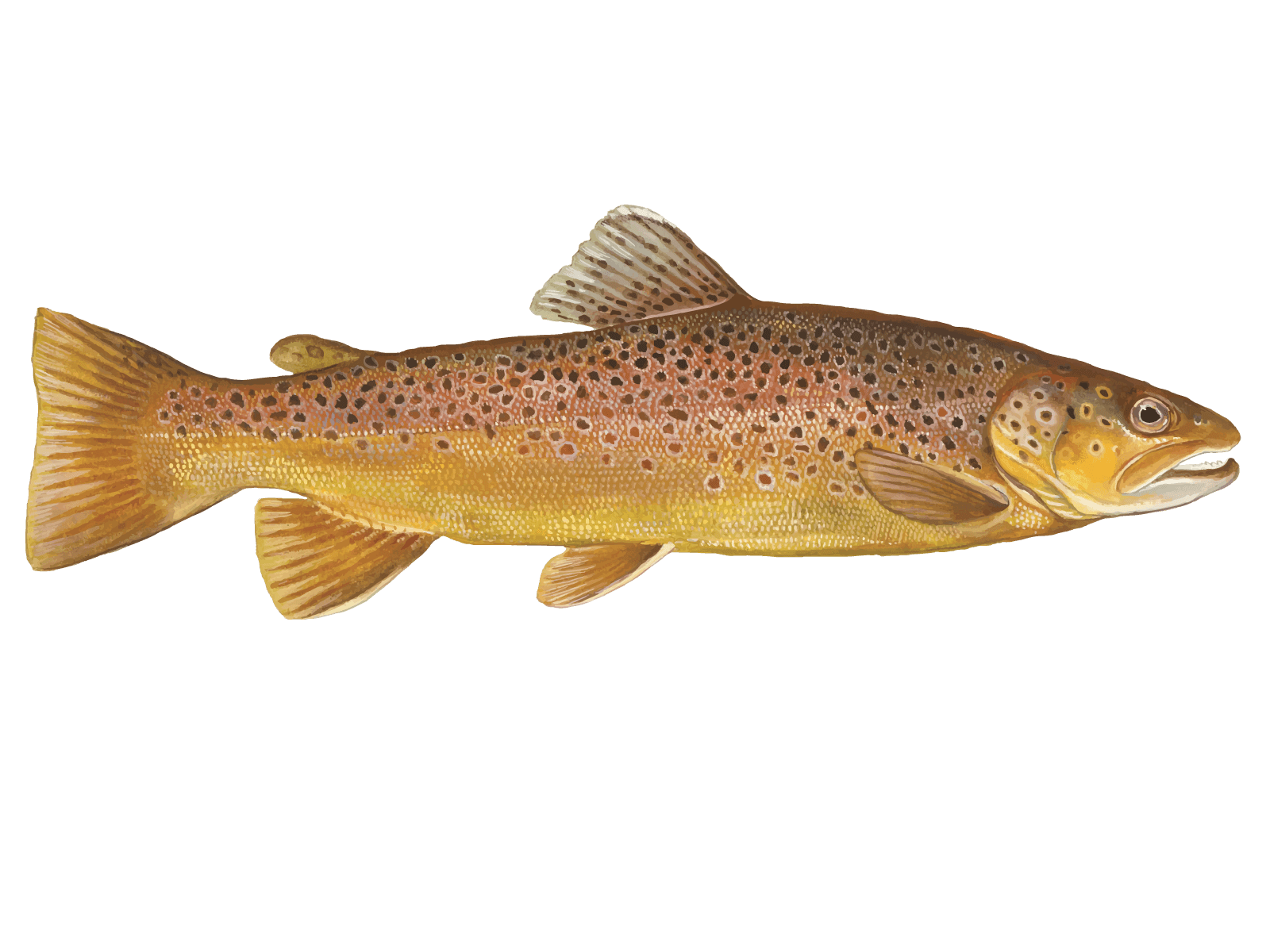
Brown Trout
Browns are the smart ones - wary, selective fish that'll test your skills but reward patience with some serious fights. These golden-brown beauties with black spots average 12-18 inches, though the big ones can push 20+ and several pounds. They love deep pools, undercut banks, and any heavy cover in cool, clear water. Fall is prime time when they get aggressive before spawning, but spring and summer evenings can be productive too. What makes them special? They're challenging to fool and fight with surprising strength, plus they're excellent on the table. They prefer low-light conditions and often feed at night. Here's something most anglers overlook: browns are opportunistic and will eat bigger meals than other trout. Don't be afraid to throw larger streamers or even small mice patterns in low light - these fish aren't shy about taking a substantial meal.
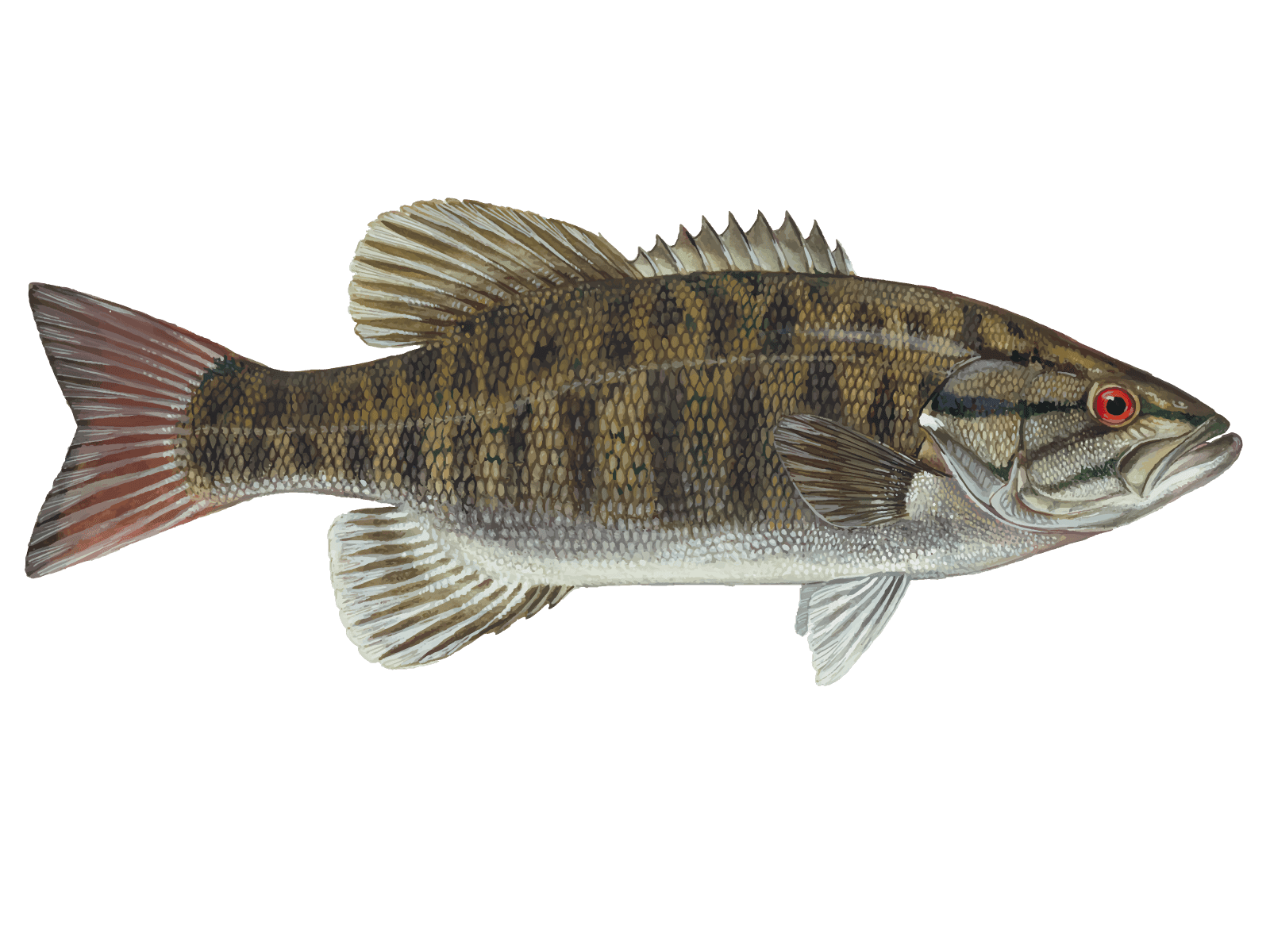
Smallmouth Bass
Smallmouth are pound-for-pound the scrappiest fish in freshwater - bronze fighters that jump, dive, and never give up easy. Most run 12-16 inches and 1-3 pounds, with those red eyes and dark vertical bars. They stick to rocky bottoms, fallen timber, and boulder fields in clear water, usually 6-20 feet deep depending on season. Spring and fall are prime when they're aggressive and shallow, though summer can be great if you fish early or late. What makes them special? Pure attitude - they'll hit hard and fight harder, plus they're actually pretty good eating. They love crawfish, so anything that mimics that works. Here's my go-to trick: use a weightless plastic tube in natural colors and let it fall into the rocks slowly. Smallmouth can't resist that crawfish falling backward motion, and the weightless rig won't hang up as much in the structure.
Striped Bass
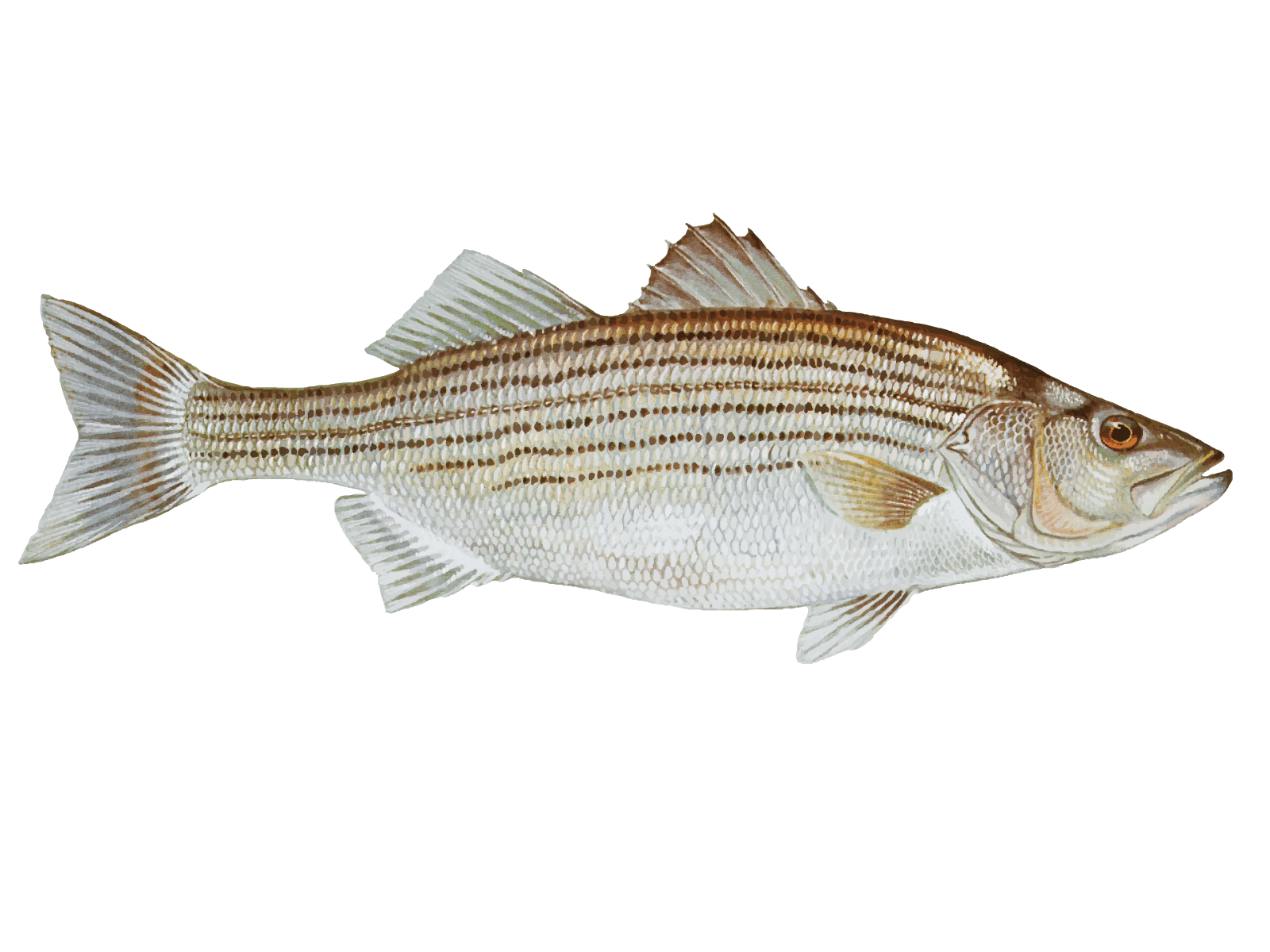
Stripers are the bullies of the water - powerful, aggressive fish that can stretch over 30 inches and hit the scales at 20+ pounds around here. Those dark horizontal stripes make them unmistakable. They're structure-oriented fish that love rocky shorelines, drop-offs, and anywhere baitfish gather. Spring and fall migrations bring the best action, but they're catchable year-round if you know where to look. What keeps people coming back? These fish fight like freight trains with long, powerful runs that'll test your drag. They're also excellent table fare with firm, sweet meat. Dawn and dusk are prime time when they push into shallows to feed. Here's what most anglers miss: focus on moving water near structure. Stripers love current breaks where they can ambush bait without working hard - tidal rips, bridge pilings, and inlet mouths are gold.
Walleye
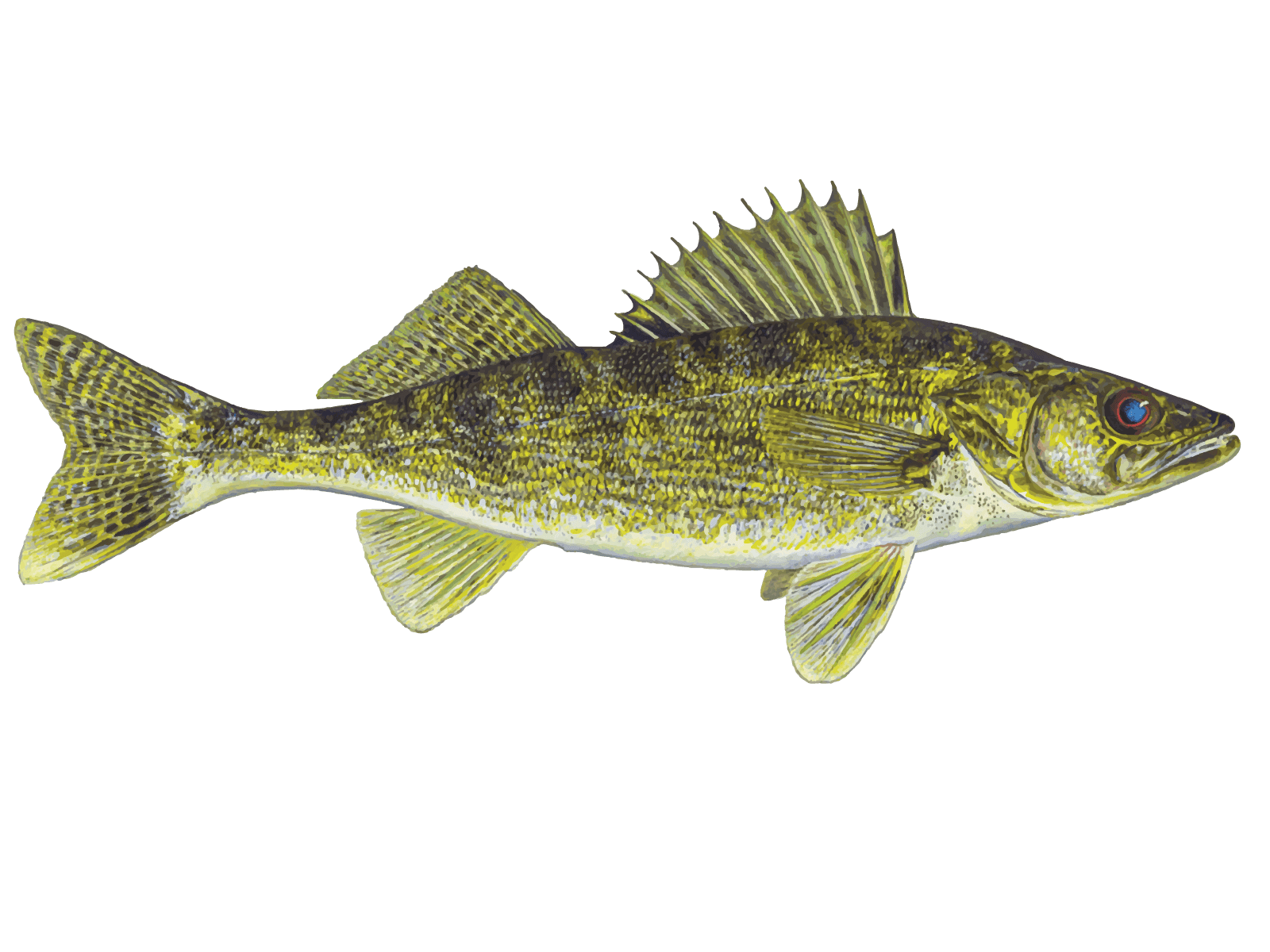
Walleye are the ultimate eating fish - flaky white meat with zero muddy taste that makes every shore lunch worth it. These golden beauties average 14-18 inches and 2-4 pounds, with those distinctive glassy eyes that help them hunt in low light. They stick to structure like rock piles, weed edges, and drop-offs, usually in 10-25 feet of water during the day. Best fishing happens at dawn and dusk when they move shallow to feed. Spring and fall are prime times, but summer nights can be magic too. Guests love them because they fight hard with that classic head-shaking battle, plus you'll actually want to keep what you catch. Pro tip: use a slow jigging presentation right on bottom - walleye rarely chase baits up in the water column, so keep it down where they live and be patient with your retrieve.
Rainbow Trout
These beauties are what trout fishing is all about - those signature pink stripes and colorful spots make them easy to identify. Most rainbows we catch run 8-16 inches and 2-4 pounds, though bigger ones definitely lurk in deeper pools. They love cool, clean water between 55-65°F and hang around rocky areas, undercut banks, and anywhere there's good current flow. Spring through fall offers the best action, especially during morning and evening feeding times. What makes them special? They're scrappy fighters that'll jump and run, plus they taste fantastic grilled up at camp. Here's a tip that works consistently: fish your nymphs just off the bottom in faster water - rainbows often hold in the current seams where they can easily grab drifting insects without working too hard.